
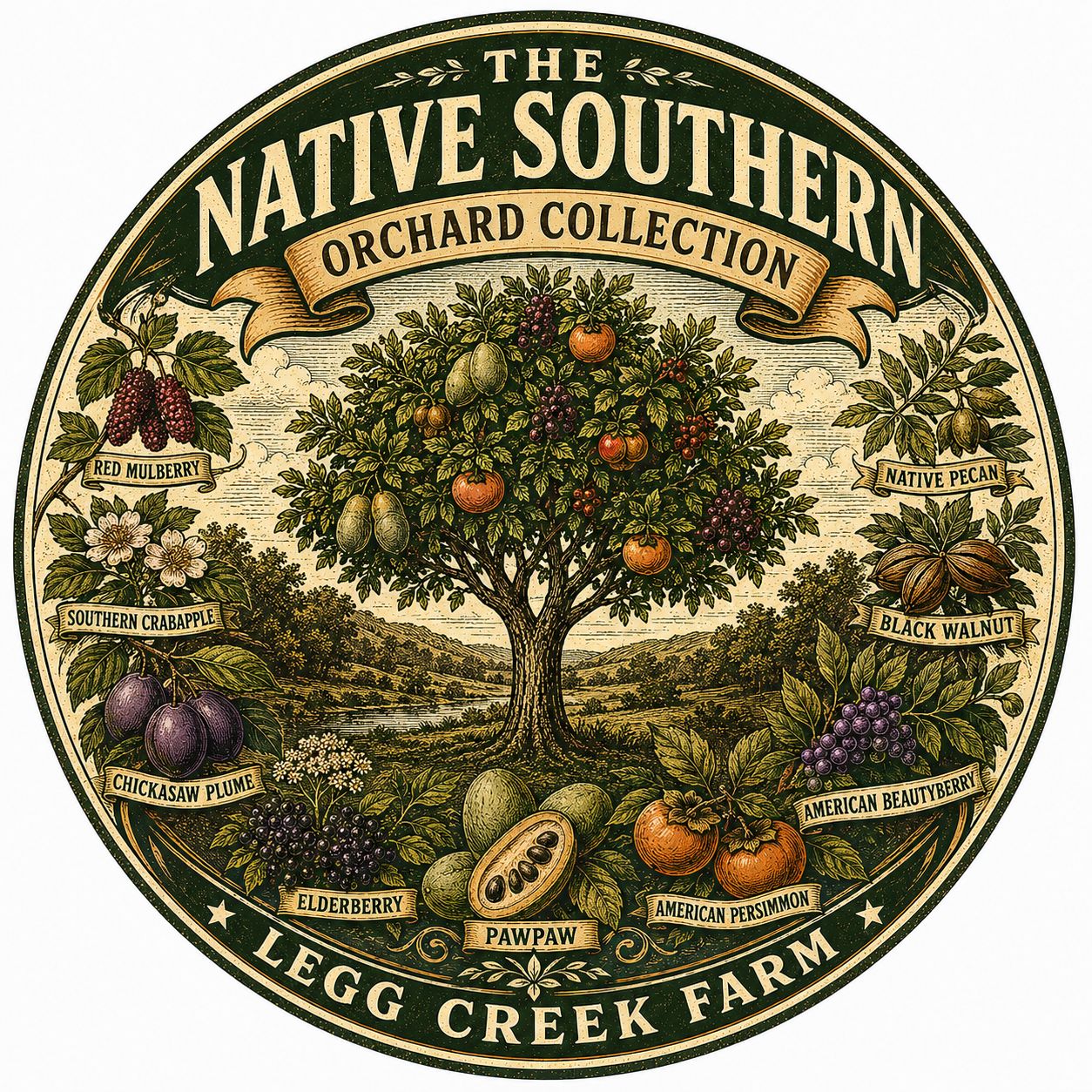
Native Southern Orchard Collection
Native Southern Orchard Collection
Discover the Fruits and Nuts That Belong Here
Long before grocery stores and commercial orchards, these remarkable native trees and shrubs fed families, sustained wildlife, and shaped the forests of the American South. The Native Southern Orchard Collection brings together some of the finest edible native species of the South into one thoughtfully curated collection.
Whether you’re interested in preserving native plants, creating wildlife habitat, planting a food forest, or simply enjoying unique fruits and nuts that thrive in Southern landscapes, this collection is an excellent place to begin.
Professionally Curated by Legg Creek Farm
This Collection Includes (all trees need approximately 300-500 chill hours):
 Pawpaw (Asimina triloba)
America’s largest native fruit, producing sweet, tropical-flavored fruit unlike anything found in grocery stores.
 Southern Crabapple (Malus angustifolia)
A beautiful native flowering tree with tart fruit prized for jellies, preserves, and attracting pollinators.
 Chickasaw Plum (Prunus angustifolia)
An early-blooming native plum producing small, flavorful fruit that is perfect for fresh eating or homemade jelly.
 American Elderberry (Sambucus canadensis)
A vigorous native shrub producing clusters of berries ideal for syrups, jams, and wildlife.
 Red Mulberry (Morus rubra)
One of North America’s finest native fruit trees, producing abundant sweet berries loved by both people and birds.
 Native Pecan (Carya illinoinensis)
A true Southern classic that can provide delicious harvests for generations.
Black Walnut (Juglans nigra)
A majestic native tree producing richly flavored nuts prized for baking and traditional recipes.
 American Beautyberry (Callicarpa americana)
Known for its stunning clusters of bright purple berries, this native shrub supports pollinators and birds while adding exceptional beauty to the landscape.
 American Persimmon (Diospyros virginiana)
One of the South’s most treasured native fruit trees, producing incredibly sweet fruit after ripening in autumn.
Why We Chose These Plants
Every species in this collection is native to the South or the broader eastern United States and has been selected for its beauty, ecological value, and edible harvests.
Together they provide:
- Native fruits and nuts from late spring through fall
- Valuable food sources for pollinators and wildlife
- Plants naturally adapted to Southern growing conditions
- A diverse collection representing the rich heritage of Southern landscapes
- An opportunity to preserve and enjoy America’s remarkable native edible plants
Harvest Season
Late Spring
- Chickasaw Plum
Early Summer
- Red Mulberry
Mid-Summer
- Pawpaw
- Elderberry
- Southern Crabapple (depending on location and season)
Fall
- American Persimmon
- Black Walnut
- Native Pecan
Autumn & Winter Interest
- American Beautyberry
Why Plant Native Fruit?
Native fruit trees often:
✔ support hundreds of native pollinators
✔ provide food for birds and wildlife
✔ tolerate Southern conditions well
✔ help preserve America's natural heritage
✔ produce delicious fruit unavailable in grocery stores
Perfect For
- Native plant enthusiasts
- Wildlife gardeners
- Homesteaders
- Nature lovers
- Conservation-minded landowners
- Anyone interested in growing uniquely American fruits and nuts
Plant a living legacy. Grow the fruits and nuts that have nourished generations while creating an orchard that can be enjoyed by your family—and local wildlife—for decades to come.